Have you ever run a campaign, shared your link, or driven traffic to your site
But nothing really happens after people land there?
They visit. They scroll a bit. And then they leave.
It’s a common situation. And often, the issue isn’t your offer or your traffic.
It’s where you’re sending people.
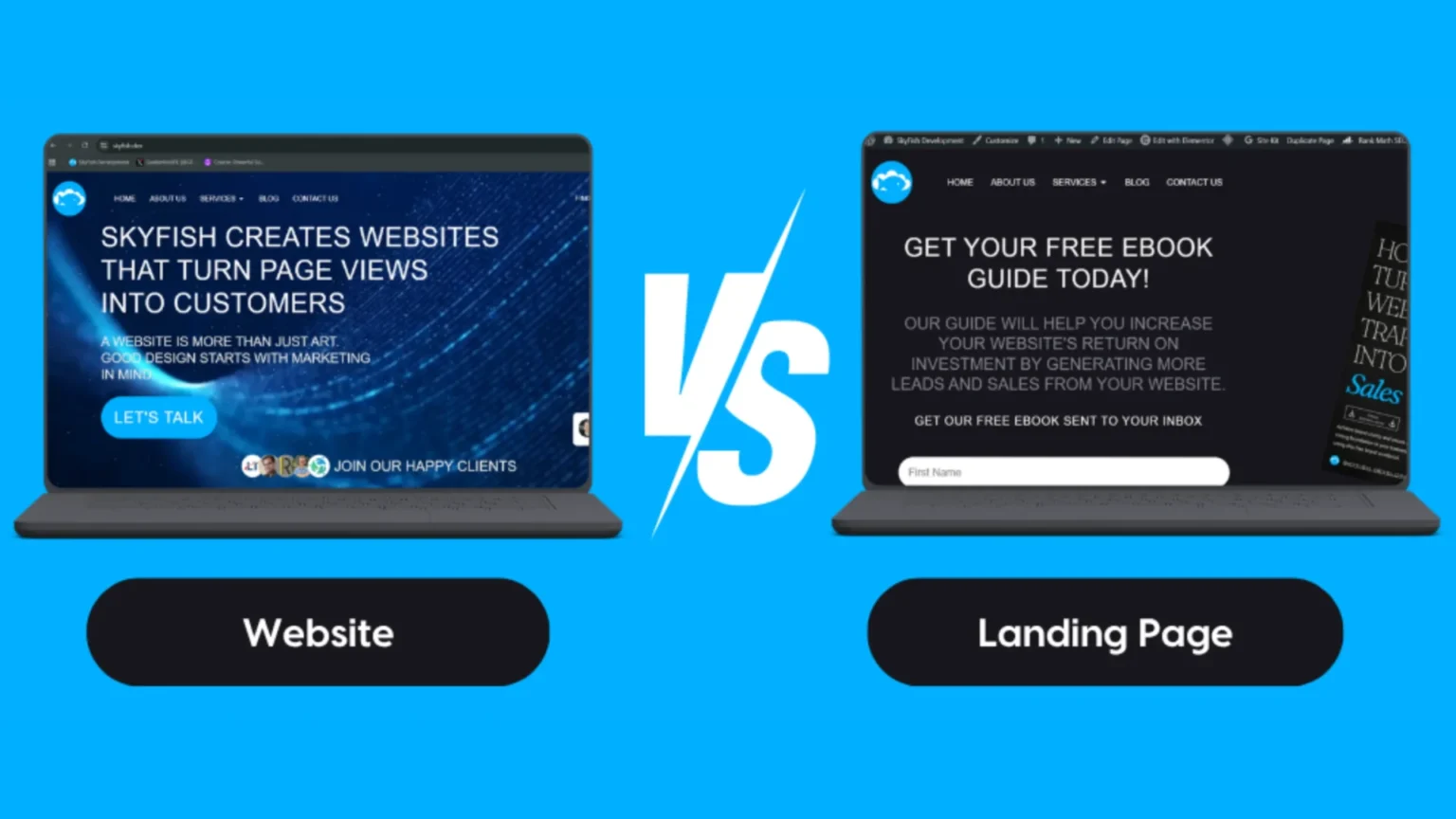
Many businesses struggle because they don’t clearly understand the difference between a website and a landing page and when to use each.
Let’s break it down in simple terms.
What is a Website?
A website is your complete online presence.
It usually includes multiple pages, such as:
- Home
- About
- Services
- Blog
- Contact
People visit a website to learn about your business, understand what you offer, and decide if they can trust you.
When a website works best:
- When someone is researching your business
- When you offer multiple services
- When you want to build long-term visibility through SEO
- When you need a central place for all your information
It is not built for quick decisions. It’s built for clarity, trust, and exploration.
What is a Landing Page?
A landing page is a single page with one clear purpose.
There are no distractions, no extra links, and no unnecessary sections.
Everything on the page is focused on one action.
That action could be:
- Filling out a form
- Booking a call
- Signing up
- Making a purchase
When a landing page works best:
- When you’re running ads
- When you want quick lead generation
- When you are promoting one specific service or offer
- When you want users to take immediate action
A landing page is designed to reduce choices and increase action.
Website vs Landing Page: Key Differences
| Feature | Website | Landing Page |
| Structure | Multiple pages | Single page |
| Purpose | Information & trust | Conversion |
| Navigation | Full menu | Minimal or none |
| Focus | Broad | One goal |
| Best for | SEO, branding | Ads, campaigns |
Why This Choice Matters
A common mistake is sending every visitor to the homepage.
If someone clicks on an ad and lands on a full website:
- They may not find what they came for
- They may get distracted
- They may leave without taking action
On the other hand, if someone wants to learn about your business and only sees a landing page:
- They may not find enough information
- They may hesitate to trust you
In both cases, the result is the same: lost opportunities.
When Should You Use a Website?
It is the right choice if your goal is to:
- Build credibility
- Share detailed information
- Show multiple services or offerings
- Rank on search engines
- Create a long-term presence online
Your website supports users who want to understand before they decide.
When Should You Use a Landing Page?
A landing page is useful when your goal is to:
- Get leads from ads
- Promote a specific offer
- Guide users toward one clear action
- Run short-term campaigns
- Test a new idea or service
A landing page works best when users are ready to act, not explore.
The Practical Approach: Use Both
In most cases, it’s not about choosing one over the other.
A simple approach works well:
- Use it to build trust and provide information
- Use landing pages for campaigns and conversions
For example:
- Ads → landing page
- Organic search → website
- Returning users → website
This way, each part of your setup serves a clear purpose.
Common Mistakes to Avoid
- Sending ad traffic to your homepage
- Adding too many links to a landing page
- Not having a proper website at all
- Expecting a website to convert quickly without guidance
- Ignoring mobile experience
Final Thoughts
A website and a landing page are not the same thing.
They solve different problems.
Your website helps people understand your business.
A landing page helps people take action.
When used correctly, both can support each other and improve your overall results.
Need Help Setting This Up?
At Skyfish, we help businesses plan and build websites and landing pages that are simple, clear, and focused on results.
If you’re unsure what your business needs, we can help you figure out the right setup.
Get in touch with us to get started.