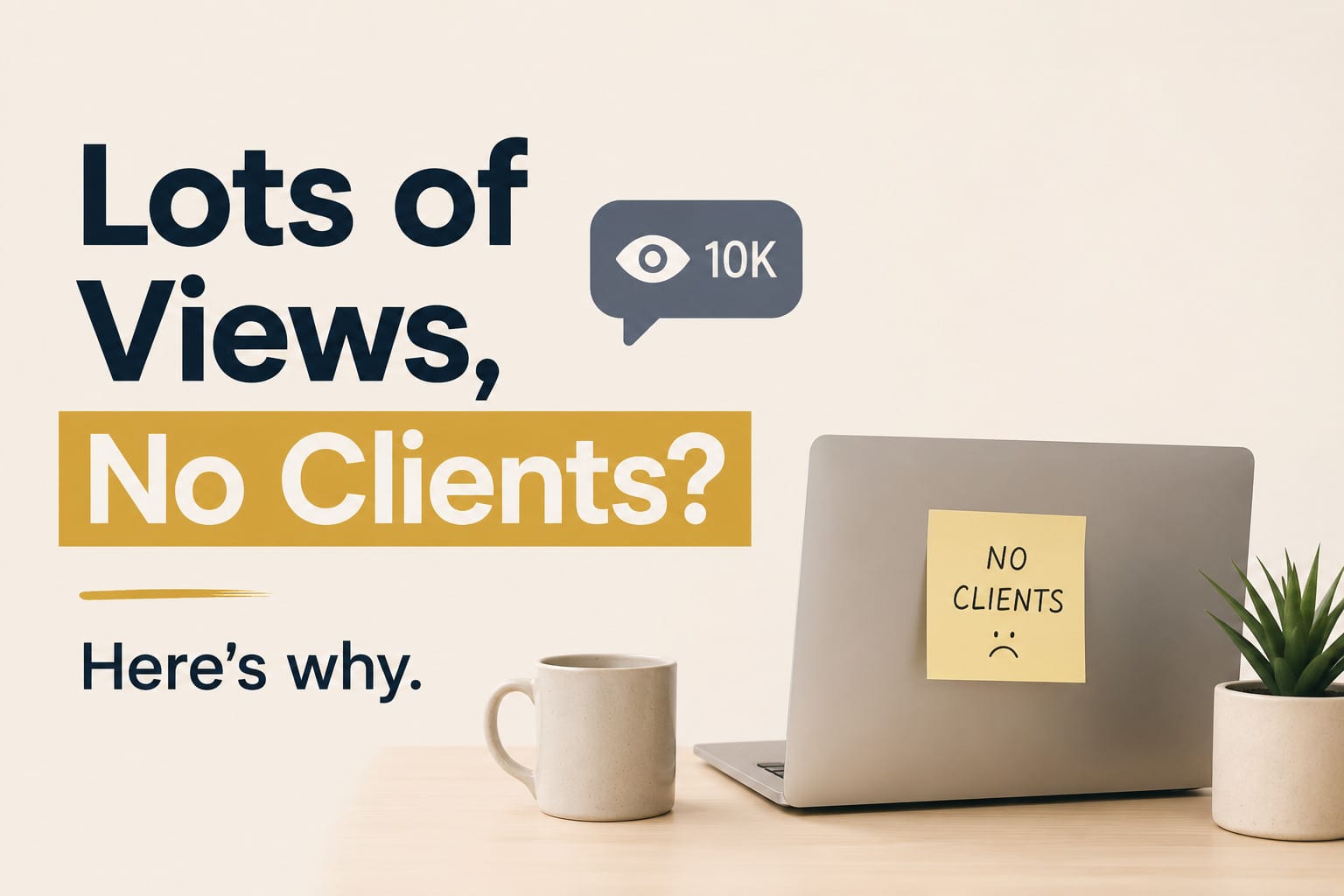
Why businesses get views, but no clients, is a common problem for many brands. Discover the main reasons your content isn’t converting, and learn what to fix first to turn views into real clients.
You’re posting consistently. Your Reels are getting views but no clients. People are watching your videos, visiting your profile, maybe even liking your content.
But your inbox is quiet. The leads aren’t coming. And you’re starting to wonder if social media actually works – or if you’re just wasting time.
Here’s the hard truth: why-business-gets-views-but-no-clients. And confusing the two is the most common – and most expensive – mistake small businesses make with their digital marketing strategy.
Let’s break down exactly why this happens, and what you need to fix first.
The Gap Between Attention and Action
Getting views but no clients means the algorithm liked your content. Getting clients means real people trusted you enough to spend money.
Those are two completely different outcomes – and they require two completely different strategies.
Most business owners are unknowingly optimising for the first while hoping it produces the second. It rarely does, at least not on its own. The journey from viewer to client runs through three stages: awareness → trust → system. Most businesses nail the first stage (awareness) views but no clients, skip the second (trust), and never build the third (system). That’s exactly where the gap lives.
Stage 1: Awareness – (Views, but no Clients)
If you’re getting views but no clients, you’ve solved the awareness problem. People know you exist. That’s genuinely valuable, and it’s not easy.
But awareness is only the entry point. Think of it like foot traffic into a shop – people walk in the door, look around, and walk right back out. Not because they don’t like what they see, but because nothing told them what to do next or gave them a reason to stay.
The problem with stopping at awareness:
- You’re reaching new people constantly, but building nothing lasting
- Each post starts from zero – no compounding trust, no momentum
- Your content calendar fills up, but your pipeline doesn’t
Viral reach without a conversion strategy is just an audience – not a business asset. And you see the views but no clients.
Stage 2: Trust – The Stage Most Businesses Skip
This is where the real work happens, and where most businesses disappear.
Trust is built through depth, consistency, and specificity. It’s not built through volume of posts alone.
Ask yourself: if a potential client found your profile today and spent five minutes looking through your content, would they know exactly what you do, who you help, and why you’re the right choice over anyone else?
If the answer is anything less than a clear yes, you have a trust gap.
What builds trust online:
- Specific social proof. Not just “great to work with” – but “they helped us land our largest client in 10 years.” Specific results from real people carry enormous weight in a potential buyer’s decision.
- Content that demonstrates expertise, not just personality. Behind-the-scenes content is great for awareness. Educational content – posts that genuinely teach something – builds authority. Both are necessary.
- Consistency over time. Trust is cumulative. A business that has been showing up with clear, valuable content for 12 months is far easier to trust than one with 50 posts in the last two weeks. Perceived longevity signals reliability.
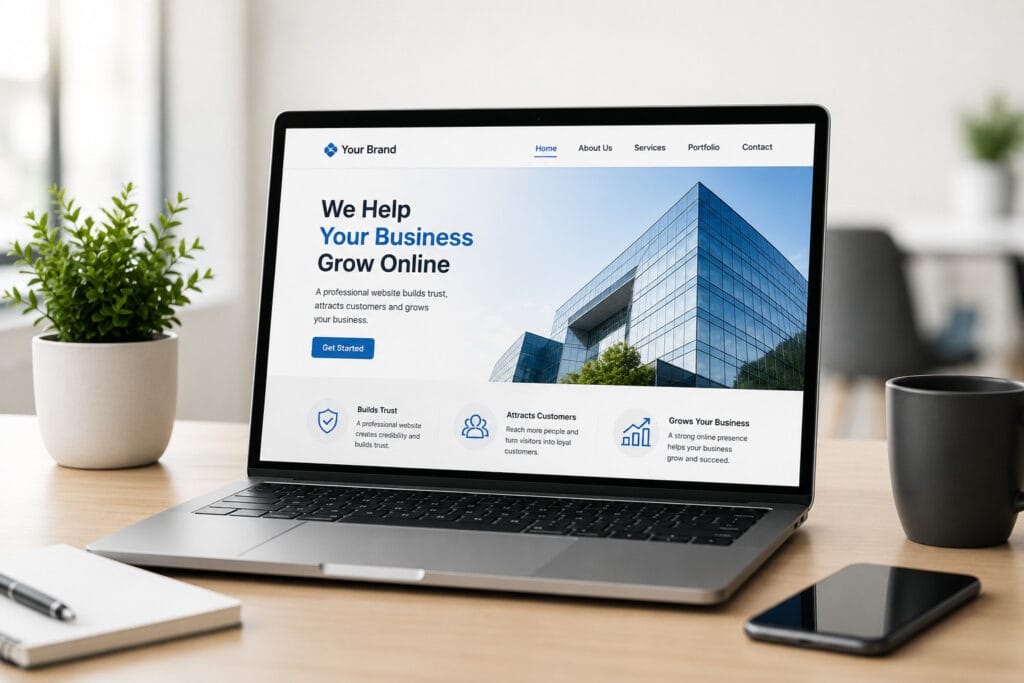
- A professional website. This one is underestimated. After someone sees you on social media, the very next thing most people do is Google you or visit your website. If your website is outdated, slow, or unclear, you lose the lead right there. Studies show that 75% of consumers judge a business’s credibility based on its website design. Social media warms them up; your website closes them or loses them.
Stage 3: The System – Where Clients Actually Come From
Here’s what separates businesses that grow from ones that stay stuck at “lots of engagement, no clients.”
A marketing system.
Most small businesses treat marketing like a collection of individual activities: post on Instagram, send an occasional email, update the website when they remember to. These activities exist in isolation. None of them connects. And without connection, there’s no conversion.
A proper digital marketing system looks like this:
1. Content creates awareness (social media, short-form video, SEO blog posts) ↓ 2. A clear path moves interested people forward (a strong website, a lead magnet, a booking page) ↓ 3. A follow-up sequence nurtures leads who aren’t ready yet (email marketing, CRM, WhatsApp automation) ↓ 4. Data tells you what’s working (analytics, conversion tracking, lead source attribution)
Without this chain, you’re leaking potential clients at every stage. The viewer who liked your Reel had no next step. The person who visited your website found no clear CTA. The lead who enquired three months ago never heard from you again.
Each of these is a hole in the bucket – and you can keep pouring water in (content) without ever filling it up.
The Most Common Reasons Views Don’t Convert to Clients
1. No clear call to action. Your content entertains or educates, but never tells people what to do next. Every piece of content – every post, every video, every page – should have a single clear next step. Book a call. Download this. Reply with a question.
2. The website doesn’t match the social media promise. Your social media is polished and engaging. Your website looks like it was built in 2018 and hasn’t been touched since. This disconnect is a silent trust killer. Your website is your most important digital asset, and for many service businesses, it’s the primary conversion tool.
3. No follow-up infrastructure. Most leads don’t convert on first contact. Research consistently shows that 80% of sales require five or more follow-ups, yet most small businesses follow up once or twice and move on. A CRM system paired with email marketing automation keeps you present without requiring manual effort every time.
4. Content that attracts everyone attracts no one. Generic content – tips that apply to any business in any industry – generates broad reach but weak intent. The more specific your content is to a defined audience with a defined problem, the more your ideal clients self-select and feel spoken to.
5. No SEO strategy for long-term lead generation. Social media generates short-term attention. Search engine optimisation generates long-term inbound traffic from people who are actively searching for what you offer – which is a fundamentally higher-intent audience. Businesses that combine social media marketing with an SEO content strategy build a compounding lead engine that works even when they’re not posting.
What to Fix First
If you’re getting views but not clients, here’s the order of operations:
Start with your website. Before optimising anything else, make sure your website clearly communicates what you do, who you help, what results you deliver, and what someone should do next. A high-converting website is the foundation for everything else that feeds into.
Add a lead capture mechanism. Give people a reason to share their contact details – a free consultation, a downloadable guide, a quiz. This turns anonymous traffic into identifiable leads you can follow up with.
Build a simple follow-up sequence. Even three to five automated emails after someone enquires will dramatically improve your conversion rate. Most of your competitors aren’t doing this, which means doing it puts you ahead immediately.
Refine your content strategy. Once the infrastructure is in place, go back to your content and ask: Is this speaking to a specific person with a specific problem? Is there a clear next step? Does it direct people toward my website or booking page?
Then scale what’s working. Once you have a system that converts, more content and more reach actually translate to more clients. Before that, it just meant more views.
The Bottom Line
Views but no clients
The businesses winning at digital marketing in 2026 aren’t necessarily the ones with the most followers or the most viral posts. They’re the ones who built a system – one where content generates awareness, a strong website builds trust, and a follow-up infrastructure converts interest into revenue.
Getting views means people are paying attention. Building the right system means that attention turns into something.
If you’re not sure where your biggest conversion gap is, that’s exactly the conversation we start with at SkyFish.
Ready to turn your online presence into a client generation system? Contact Us and let’s find exactly where you’re losing leads – and what to fix first.